1850–1918
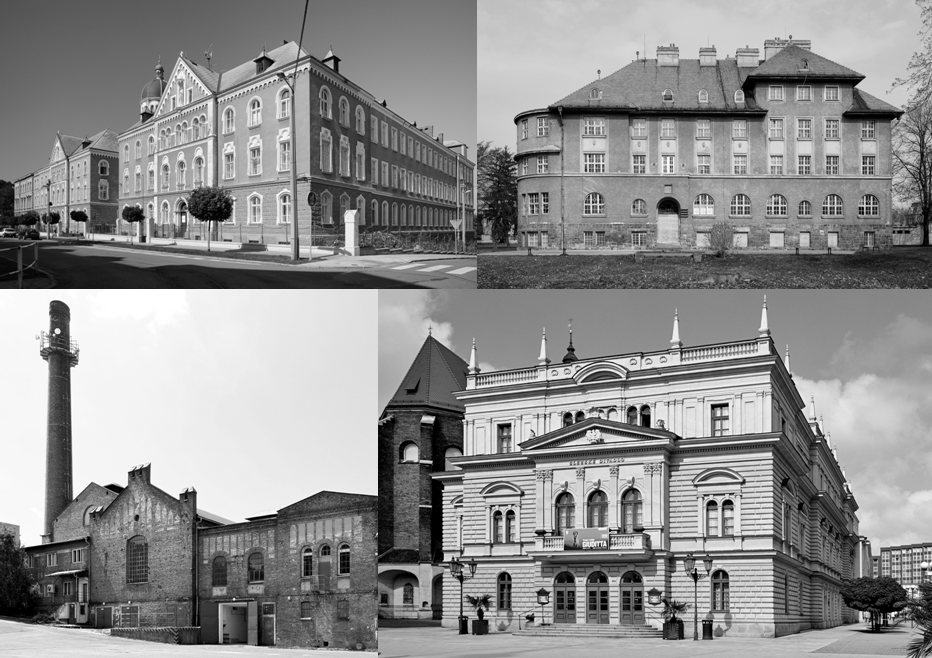
From the mid-18th century, when Maria Theresa lost most of Silesia, Opava assumed the role of provincial capital of Austrian Silesia. Politically, economically, and culturally, it was closely tied to Vienna, the imperial capital. This relationship was reflected in the transformations of the city’s architectural culture, which moved through phases of romantic, strict, and late historicism, before giving way around 1900 to modernism in the form of floral and later geometric Art Nouveau. These changes unfolded against the backdrop of broader processes of modernization, industrialization, urbanization, and the nationalization of the Central European space. Opava’s architectural transformation was most visible in the historic centre, surrounded by parks and a belt of educational and cultural institutions, representative buildings, palaces, and rental apartment houses. The suburbs of Opava also changed significantly, filling with new types of buildings and complexes such as schools and healthcare facilities, hospitals, military buildings, urban infrastructure, new public spaces, and facilities related to housing and the development of mass transport, namely the railway and the city tram network. Many architects, builders, and designers participated in these changes, working both in the municipal and provincial building offices and in private practice. Most had studied or worked in Vienna, which remained a vital source of inspiration for Opava and its society even after 1918.